GOATiM innovation / prototype 01 of 03

GEN-U

A personal memory layer for everyday life.

A lightweight, wire-like wearable idea that could capture conversations, turn them into useful context, and help you find what matters later.

Explore the idea

Gen-U is a prototype concept. The image illustrates intended features, not tested product specifications.

The idea

Remember the moments you meant to keep.

Conversations carry names, decisions, promises, and ideas that are easy to lose. Gen-U imagines an unobtrusive assistant that helps turn those moments into a searchable personal record, with the wearer in control of capture and access.

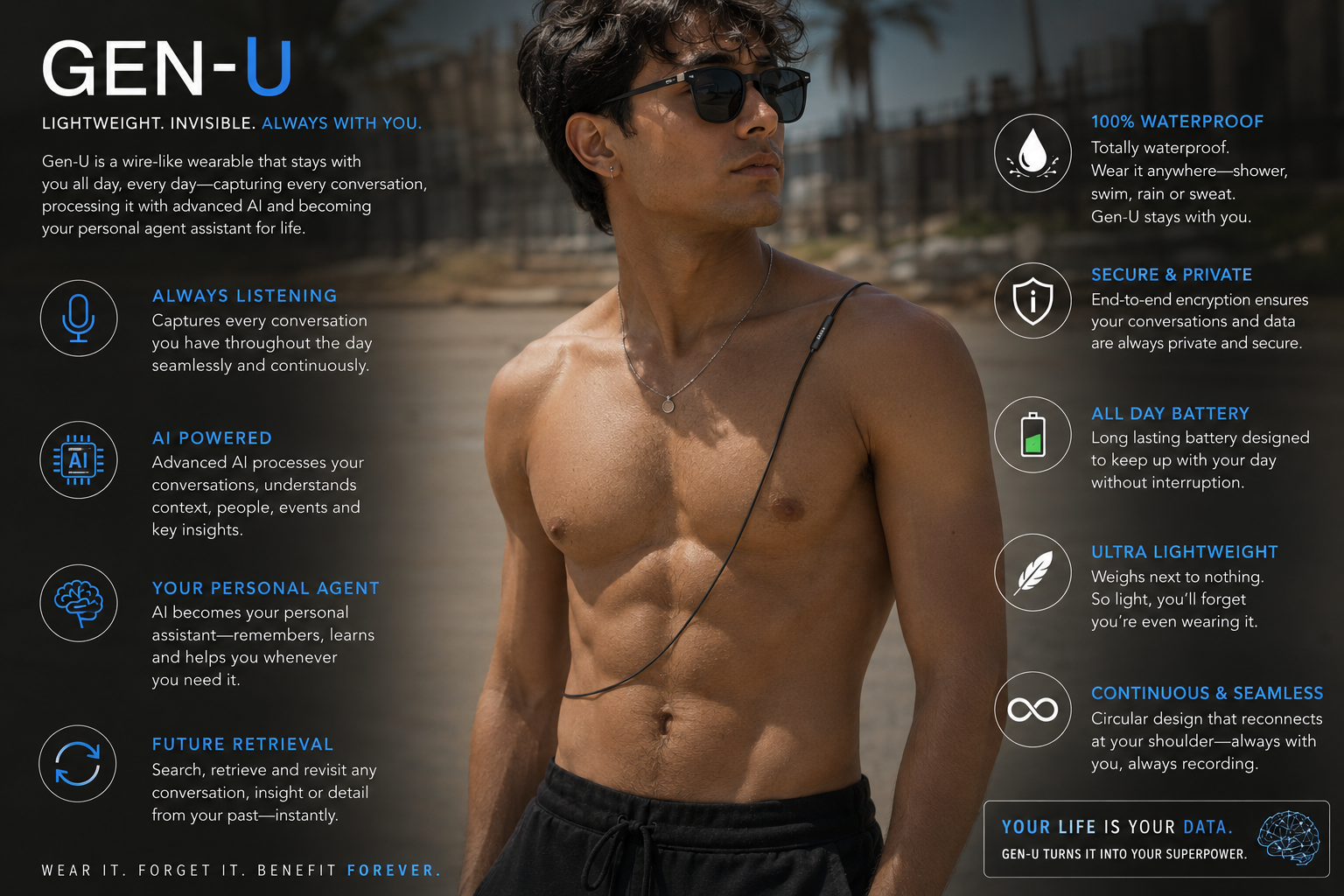
Gen-U concept graphic showing a thin wearable cable and proposed features including conversation capture, AI assistance, retrieval, privacy, waterproofing, and all-day wear
Gen-U concept artwork supplied for this prototype. Features shown are design intentions.

Proposed features

What the prototype is designed to do.

01 / CAPTURE

Continuous context

The wire-like form is intended to stay with you through the day, making it possible to capture conversations without reaching for a phone. A usable product would need clear recording controls and visible feedback so everyone knows when capture is active.
02 / UNDERSTAND

AI-powered memory

Speech processing could turn recordings into transcripts, identify topics, people, events, and action items, and surface concise summaries. The goal is to retain useful context, rather than leave the wearer with hours of audio to review.

03 / ASSIST

A personal agent

With permission, that context could help answer questions such as “What did we agree on?” or “Who mentioned that idea?” Over time, the assistant could connect related moments and help the wearer follow through on plans.

04 / RETRIEVE

Search your past

A future retrieval experience would let you revisit a conversation, insight, or detail by person, topic, or approximate time. Results should link back to the original moment so summaries can be checked against their source.

05 / PROTECT

Privacy by design

The concept calls for encryption, access controls, and clear choices about what is stored, shared, or deleted. Those protections, including any end-to-end encryption claim, would need to be implemented and independently validated before launch.

06 / WEAR

Made to disappear

The visual proposes a very light, continuous loop that rests around the shoulder. Waterproofing and a battery that lasts through the day are design targets for everyday use, not measured ratings or run-time claims yet.

How it could work

From a passing conversation to a useful answer.

1. Choose when to capture

The wearer starts a session with clear recording status and considers the consent of others nearby.

2. Turn speech into context

Audio is transcribed and organized into people, topics, decisions, and follow-ups.

3. Ask and revisit

Later, the wearer searches or asks a question, then checks the relevant source moment.

Prototype status

Gen-U is an exploration, not a released device. The artwork describes a product direction. Hardware dimensions, recording behavior, AI accuracy, battery life, water resistance, security architecture, and availability have not been established on this page.

GOATiM innovation / communication concept

Meet Happie Talkie.

A push-to-talk translation companion imagined for the moments when two people want to connect but do not share a language. Speak naturally, translate in near real time, and let the other person hear the message in the language they understand.

Push to talkTwo-way translationNatural voiceTravel-readyPrivacy controls
01 / LISTENCapture speech
→
02 / UNDERSTANDTranscribe meaning
→
03 / TRANSLATEAdapt the language
→
04 / SPEAKPlay a clear voice
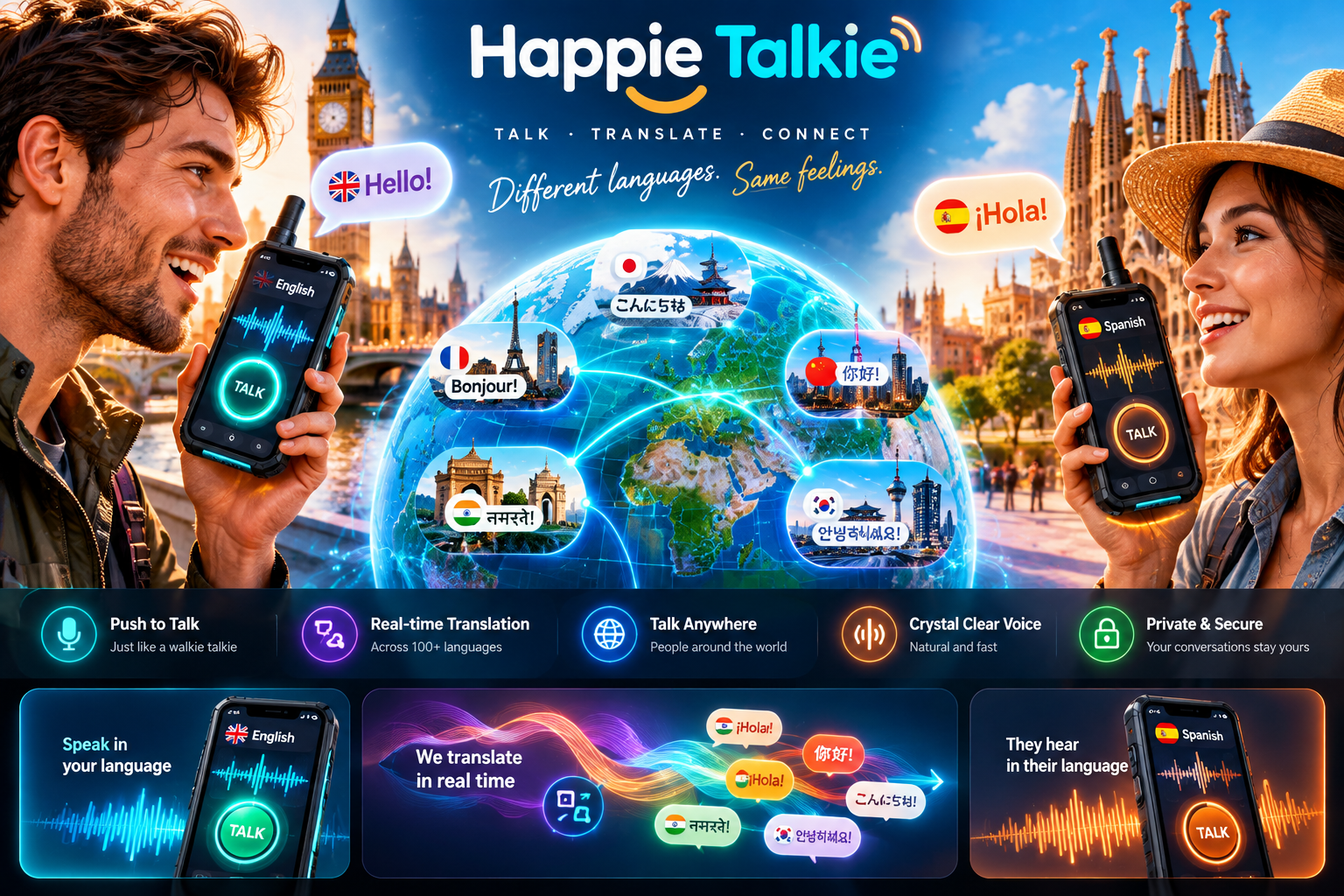
Happie Talkie concept artwork showing two travellers using push-to-talk translation devices and a global network connecting conversations across English, Spanish, French, Japanese, Chinese, Hindi, and Korean
Happie Talkie concept artwork supplied for this prototype. Languages, interface elements and capabilities shown are product intentions.

Proposed features

Conversation first. Technology in the background.

The concept focuses on a short interaction loop that feels closer to a walkie-talkie than a translation form. Every stage would need to balance speed, meaning, voice quality and user control.

01 / TALK

One clear action

Press and hold to speak, then release to translate. A visible listening state and an immediate stop control would make it clear when audio is being captured.

02 / TRANSLATE

Meaning across languages

Speech recognition could create a transcript, identify the selected language pair and translate the message while preserving names, numbers and conversational intent.

03 / HEAR

A natural spoken reply

Text-to-speech could play the translation in a clear voice so the listener does not need to read a screen. Replay, pace and volume controls would help in noisy or unfamiliar settings.

04 / CHECK

Text beside the voice

Showing the original transcript and translated text would let both people catch recognition mistakes before acting on important directions, prices, dates or instructions.

05 / ADAPT

Built for real conversations

Language selection, automatic turn-taking, phrase history and optional offline language packs could support travel, hospitality, events and everyday multilingual encounters.

06 / PROTECT

Private by design

A production version would need explicit recording indicators, encrypted transport, minimal retention and an easy way to delete conversation history. Local processing should be preferred where device capability allows it.

How it could work

Speak here. Be understood there.

1. Choose the conversation

Select the two languages and whether translated text, spoken audio or both should be returned.

2. Hold, speak and release

The device captures one turn, transcribes it and produces a translation designed for quick conversational exchange.

3. Listen, verify and reply

The listener hears the translated voice, can check the text, and uses the same simple control to answer.

Prototype status

Happie Talkie is a product concept, not a released translation service or device. The artwork expresses the intended experience. Language coverage, translation accuracy, latency, offline operation, voice quality, security design, hardware form and availability would require prototyping, testing and validation. Sensitive, medical, legal or emergency conversations should never rely on an unverified translation alone.

GOATiM innovation / developer tooling concept

Meet IntentLog.

A proposed repository-native ledger for software intent. It would connect feature requests and decisions to the commits and verification that followed, giving developers and coding agents a clearer account of why a project changed.

Timestamped requestsHuman-readable contextLinked implementationPortable format
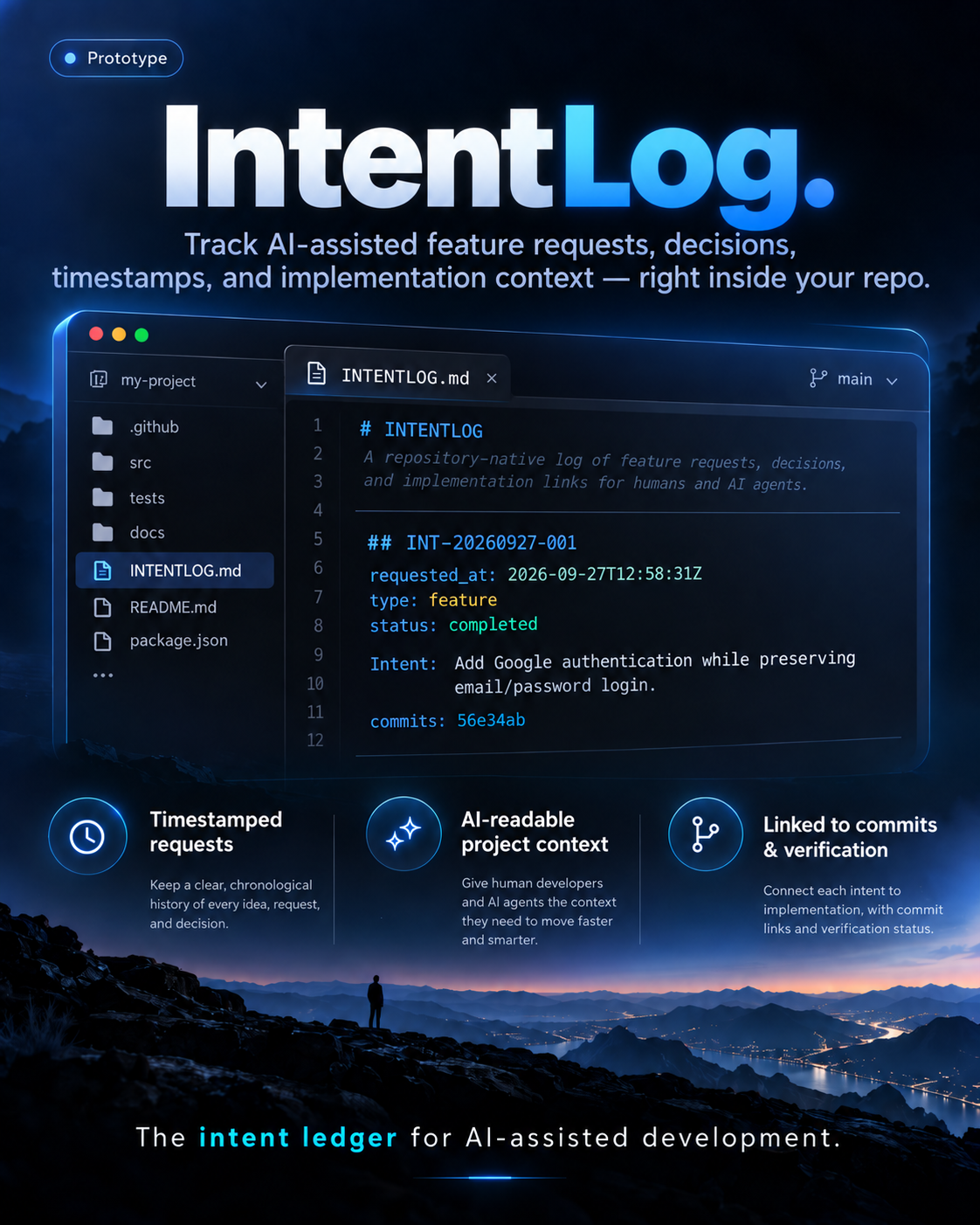
IntentLog concept artwork showing an INTENTLOG.md file in a code editor, with a timestamped feature request, implementation commit, and three proposed benefits
IntentLog concept artwork supplied for this prototype. The sample entry and interface illustrate the proposal.

Proposed features

Keep the reason beside the result.

The proposal starts with a readable file in the repository. Each entry would preserve the durable request and point to the work that addressed it.

01 / RECORD

Timestamped intent

Give each request a stable ID and timestamp, then record its goal, constraints, and status in clear language.

02 / CONNECT

Implementation evidence

Link completed requests to commits, pull requests, and verification so readers can follow the path from idea to code.

03 / EVOLVE

History that stays legible

Append a new entry when requirements change and link it to the earlier decision, preserving the evolution of intent.

04 / SHARE

Context for people and agents

Use a simple, portable format that future contributors and coding agents can read without depending on one tool or provider.

How it could work

Request. Implement. Verify.

1. Capture the request

Summarize the human's intended change, constraints, and acceptance criteria without copying a raw prompt by default.

2. Link the work

Record the implementation references as code and decisions are made.

3. Confirm the outcome

Add verification evidence and keep requested, implemented, and verified states distinct.

Prototype status

IntentLog is a proposed format, not an established standard or released tool. Its schema, workflow, integrations, and usefulness across repositories would need to be specified and tested with real projects.